



























A Dry Dock for the Forgotten Coast: Gulf County’s Bold Bet on Its Maritime Future
Port St. Joe has spent the better part of three decades working to rebuild itself. The net ban of 1994 gutted its fishing industry. The papermill closure in 1999 erased hundreds of jobs overnight. Hurricane Michael in 2018 delivered a blow that left the entire community reeling. Through every one of those setbacks, Gulf County kept looking for the thing that would finally put it on stable economic ground — a foundation strong enough to outlast any single storm or industry collapse.
That foundation, many believe, is sitting in the water.
Gulf County officials have revived a proposal to build a floating dry dock at the Port of Port St. Joe, and the ambition behind the project matches the scale of the opportunity. The overall cost of the dry dock is estimated at approximately $124 million, with funding structured around a $45 million investment from Eastern Shipbuilding Group, a Gulf County bond of $21.5 million, $11 million in state grants, and $4 million in state and federal appropriations. The county is pursuing a Triumph Gulf Coast grant to cover a significant portion of the remaining balance, continuing an effort that has been years in the making.
What a Floating Dry Dock Actually Does
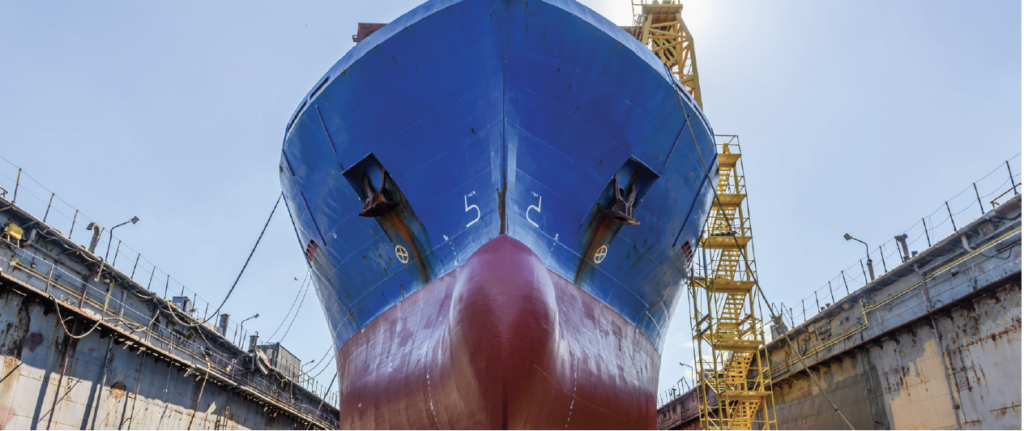
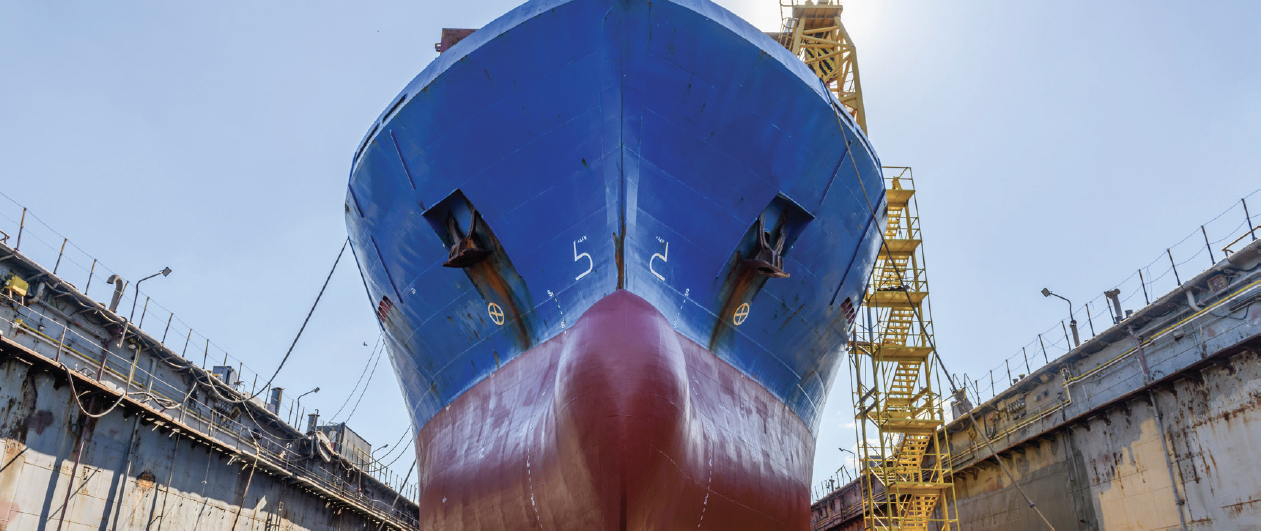
For those unfamiliar with maritime infrastructure, the concept is worth explaining. A floating dry dock is essentially a floating ship-repair garage where a vessel can be raised completely out of the water. All ships must spend a certain amount of time in dry dock for mandated maintenance in compliance with maritime regulations. Think of it as the maritime equivalent of a service center — one that handles everything from routine inspections to major repairs on vessels that can weigh thousands of tons.
The proposed facility would be a self-docking floating dry dock capable of handling vessels up to 10,000 long tons, positioned on deepwater property at the Port of Port St. Joe. Eastern Shipbuilding has embarked on a 15,000-ton dry dock project specifically designed to service both government and commercial ships, capable of hauling large deep draft vessels. The facility would be designed by Heger Dry Dock, Inc., one of the most respected names in the industry.
The Economic Case
The numbers behind the project are significant. The proposal projects 125 jobs in vessel outfitting and 90 in repair haul-out, as well as 563 permanent indirect full-time jobs based on an economic multiplier of 2.62. These are not minimum wage positions. Ship repair and maritime trades — welders, shipfitters, pipefitters, electricians, machinists — represent exactly the kind of skilled, well-paying industrial jobs that Gulf County has been working to attract for decades.
A floating dry dock would allow for steady, good-paying jobs as a ship repair facility rather than relying solely on contracts secured by Eastern Shipbuilding for new vessel construction. That distinction matters enormously. New construction contracts come and go based on government procurement cycles and commercial demand. Repair and maintenance work, by contrast, is constant — every vessel operating in the Gulf of Mexico will eventually need dry dock time, and right now the nearest major facilities are in Tampa, Mobile, and New Orleans.
The proposal envisions Port St. Joe, Gulf County, and the region becoming a vessel outfitting and repair center for the northern Gulf of Mexico, competing directly with Tampa, Mobile, New Orleans, and related vessel outfitting and repair locations.
For a county whose civilian workforce remains well below the state average, that kind of regional positioning would be transformational.
Eastern Shipbuilding’s Role
The project’s anchor tenant is Eastern Shipbuilding Group, already the largest private employer in Gulf County. Eastern Shipbuilding Group opened its Port St. Joe facility on a 40- acre site encompassing 1,000 feet of deepwater bulkhead with unrestricted access to the Gulf of Mexico for sea trials and vessel testing. The facility already handles final outfitting of major commercial vessels — including the now-famous Ollis-class Staten Island Ferries that were completed there before making their way to New York Harbor.
Eastern proposes that Gulf County Commission and the Port of Port St. Joe retain ownership of the floating dry dock, with an exclusive 50-year lease and purchase option granted to Eastern Shipbuilding Group, who would be responsible for all maintenance, upkeep, and repair of the facility under a triple-net lease arrangement. The structure keeps the asset in public hands while putting the operational responsibility squarely on the company with the expertise and the workload to make it viable.
Broad Community Support
Gulf County commissioners have set the creation of a Maintenance, Overhaul and Repair floating dry dock as their number one economic development priority. That unanimous support extends well beyond the county line. The dry dock proposal has received letters of support from various organizations throughout the region, including the Franklin County Board of County Commissioners.
County Administrator Michael Hammond has noted that the Triumph Gulf Coast funding process remains the key challenge, speculating that the county could secure north of $30 million from Triumph, leaving the county to bridge the remaining gap. Commissioner Randy Pridgeon has emphasized that connecting the proposal to education and workforce development will be critical to its success with the Triumph board — a connection already being made through Gulf County’s broader Workforce Pathways Initiative, which includes a Maritime Academy designed to feed trained workers directly into exactly this kind of facility.
The Bigger Picture
Gulf County has been waiting a long time for its next chapter. The papermill site that sat contaminated and dormant for years is now home to an active shipyard finishing vessels that sail to New York and serve the United States Coast Guard. The port that once seemed like a stranded asset is now being discussed in the same breath as Mobile and Tampa as a regional maritime hub.
The floating dry dock is not just an infrastructure project. It is a statement — that this community on Florida’s Forgotten Coast is done being overlooked, and that the deep water, the skilled workforce, and the determination have been here all along.
Related Articles

Sean of the South: Enough
May 25, 2026
By Sean Dietrich What if I told you that you are enough? Moreover, what if you woke up this morning

Flora and Fauna of the Historic Gulf Cemetery
May 25, 2026
By Helen Petre South of 98, on 293, almost to the beach, is a cemetery on 40 acres of pristine
May Fishing Report on the Forgotten Coast
May 25, 2026
May is the month that reminds every angler on the Forgotten Coast exactly why they live here. The water temperatures