By Captain Krista
If you’ve been anywhere near Apalachicola Bay lately, you’ve probably noticed something special in the air — yes, the oyster tongs are back — and the oyster industry is officially open for business. After years of closures, restoration, and a whole lot of patience, seeing tongers hauling up healthy oysters again feels like saltwater nostalgia.
Why Fishermen Are Smiling (and Should Be)
This isn’t just an oyster story — it’s a fishing story. Oysters are the unsung heroes of the bay. Every reef is a living filter, cleaning the water, improving clarity, and creating the kind of habitat fish love. Cleaner water means healthier grass beds, better forage, and stronger populations of redfish, trout, flounder, sheepshead, and more.
In plain fisherman terms: good oysters = good fishing.
The oyster reefs of any area offer a number of benefits: they break current, hold bait, and give juvenile fish a safe place to grow up before they start stealing your bait and running drag. When oysters thrive, the entire food chain shows up to the party.
FUN FACT: Did you know: A single oyster can filter up to 50 gallons of water per day. Oysters are filter feeders; they pump water over their gills, trapping food (like algae) and particles in mucus. This process removes excess nutrients, silt, and harmful algae, preventing oxygen depletion in the water.
A Win for the Watermen
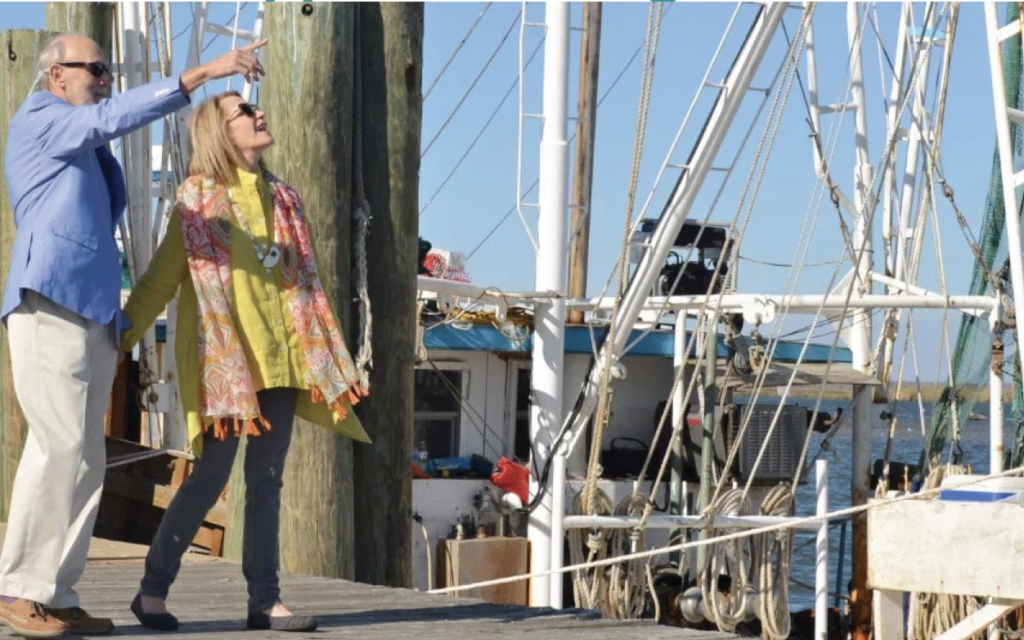
Seeing oystermen back on the water matters just as much as seeing fish on the flats. This bay has always been a working waterfront, and has provided employment for my own family since at least the 1800’s. The reopening means livelihoods restored, traditions passed down again, and offers a little boost to the local economy from its own local resources.
And the early reports are promising. Restoration efforts are paying off, and Mother Nature is finally getting a little breathing room. And, when the oystermen cull their catches as part of the harvesting process, the barnacles released back onto the reefs attract fish like black drum and sheepshead to the area.
Before the oyster crisis, the Apalachicola Bay was a busy fishery, with limits often caught early enough in the day that fishing trips targeting quite a number of species in a single outing, and it was not uncommon to catch spanish mackerel and cobia in the middle of the bay. The oyster reefs were our “honey holes” and we fished them daily. While both the fish and the fishermen have adapted throughout recent years, it’s exciting to see the bay reopen, the oyster bags filling and hope rising that our bay is once again becoming the fishery that has provided for so many of us, for generations.
Now, don’t let hope for returned perfection discourage you from enjoying the amazing fishery that still employs my family to this day, over 130 consecutive years, and counting. Because these cool winter months are actually the best time to catch one of the biggest fish you will catch inshore in this area: the “bull” redfish. Yes, that’s correct. This is the time of year when the big red drum are close to shore and ready to test any angler’s stamina. So, be sure your drag is set correctly before you cast, and prepare to have a blast!
When fishing near oyster reefs, you are likely to also catch the cousin of the red drum, the black drum, which is an equally exciting challenge. Catching these prehistoric looking oyster-connoisseurs is a good sign that the oysters are back, surviving and thriving!
The Big Picture: Healthy oysters don’t just feed families and restaurants — they support the entire ecosystem that anglers depend on. From clearer water to stronger fisheries, this reopening is a rising tide kind of moment.
So here’s to full oyster bags, bent rods, and an Apalachicola Bay that’s reminding everyone why it’s one of the most special fisheries on the Gulf Coast. If the oysters are happy, the fish aren’t far behind — and neither are we.
Tight lines… and pass the hot sauce.
For local FISHING TIPS or to enjoy a FUN DAY on the water, BOOK A TRIP WITH ISLAND CHARTERS!
BOOK NOW and SAVE $100 on all 2026 charters. Call 850.542.2542 or visit www.fishSGI.com.